
Introduction: Why Revisit the Fitbit Sense 2 in 2026
In a wearable market that moves at an aggressive annual cadence, revisiting a device like the Fitbit Sense 2 several years after launch may seem counterintuitive. New sensors, AI-powered insights, and increasingly smartwatch-like experiences dominate headlines. Recent reports from CES 2026 highlight how modern wearables are increasingly integrating AI to support personalized health and activity tracking, underscoring the Sense 2’s continued niche as a health-first device.
Yet in practice, many of the most widely used wearables in 2026 are not the newest models—they are the ones that continue to deliver reliable insights, strong battery life, and meaningful health data over time. Fitbit Sense 2 fits squarely in this category.
Trusted in Research
Wrist-worn consumer wearables have been widely used in scientific studies, with Fitbit devices among the most frequently evaluated brands. This underscores the reliability of Fitbit tracking and its relevance for everyday health monitoring.
Originally launched as Fitbit’s most advanced health and fitness smartwatch, the Fitbit Sense 2 was never designed to compete head-to-head with app-heavy platforms like the Apple Watch or Wear OS devices. Instead, it was built around a different thesis: that long-term wellness, stress awareness, and recovery insights matter more than third-party apps and daily charging.
Fast forward to 2026, and that positioning looks increasingly relevant. Burnout, sleep disruption, and stress management are now central conversations in both professional and athletic communities. At the same time, many users are experiencing “feature fatigue” from smartwatches that do everything—while demanding constant attention and frequent charging.
This review takes a fresh, critical look at the Fitbit Sense 2 in 2026. We examine what still holds up, what feels dated, and—most importantly—who this device still makes sense for in today’s wearable landscape.
Fitbit Sense 2 Highlights
Before diving into the full review, it helps to take a step back and see the Fitbit Sense 2 highlights. The overview below highlights its category, core focus, standout strengths, and key limitations—offering a quick snapshot of what makes this health-first wearable relevant in 2026.
Fitbit Sense 2 — At a Glance
- Advanced health and wellness smartwatch
- Stress, sleep, and holistic health insights
- Continuous stress tracking via cEDA
- ECG and heart health features
- Multi-day battery life
- Strong sleep and recovery insights
- No third-party app ecosystem
- Limited smartwatch features
- Fitness tracking is solid, but not elite
While the summary above outlines where the Fitbit Sense 2 sits in the broader wearables landscape, its real value becomes clearer when those strengths and trade-offs are examined in everyday use. To understand why the Sense 2 continues to hold relevance in 2026, it is worth looking more closely at its core features—starting with design and build quality.
Check current Fitbit Sense 2 pricing on AliExpress
As an Amazon Associate, WearableFitnessTech earns from qualifying purchases.
Design, Comfort, and Everyday Wearability
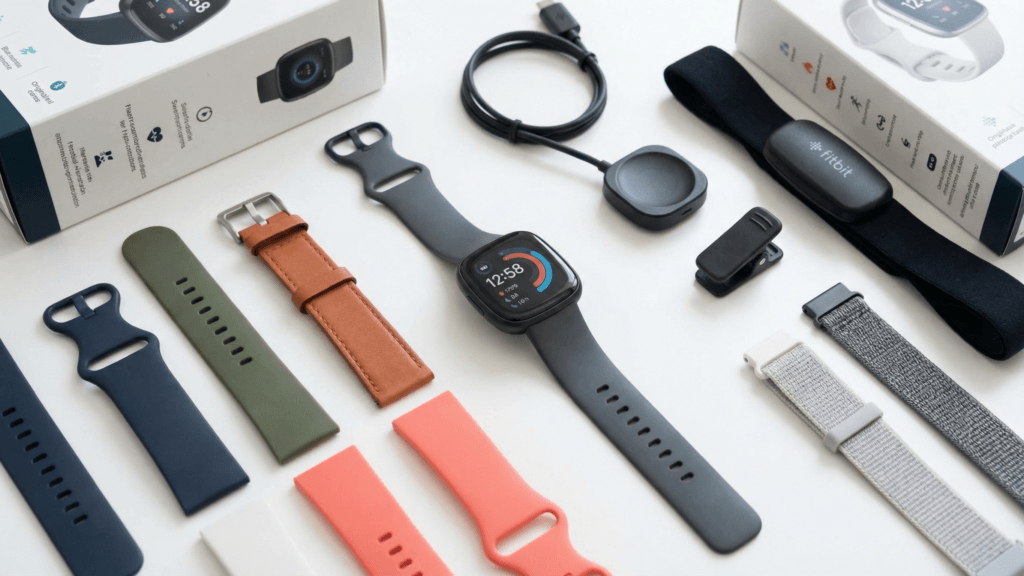
From a design perspective, the Fitbit Sense 2 has aged gracefully.
The minimalist case design, rounded edges, and lightweight construction make it well suited for 24/7 wear—an essential requirement for a health-focused wearable. Unlike bulkier sports watches or heavier smartwatches, the Sense 2 is comfortable during sleep, long workdays, and extended periods of passive tracking.
The AMOLED display remains sharp and readable, with sufficient brightness for outdoor use. While it does not match the visual flair or fluidity of newer flagship smartwatches, it remains functional and unobtrusive—consistent with Fitbit’s health-first philosophy.
One of the most debated design elements is the haptic side button, which replaced the physical button found on earlier Fitbit models. While it requires a short adjustment period, long-term users generally report that it becomes second nature. In 2026, it still feels more deliberate than delightful, but it aligns with the device’s understated character.
Overall, the Fitbit Sense 2 prioritizes comfort and wearability over visual impact, and that tradeoff continues to serve its intended audience well.
Health and Wellness Tracking: Still a Standout in 2026?
Health tracking is where the Fitbit Sense 2 continues to justify its relevance.
Wellness Insights
The Fitbit Sense 2 advanced stress monitoring, heart rate tracking, and sleep insights demonstrate the broader health benefits of wearable technology , offering actionable data that supports recovery, stress management, and overall wellness.
Body Response and Stress Tracking (cEDA)
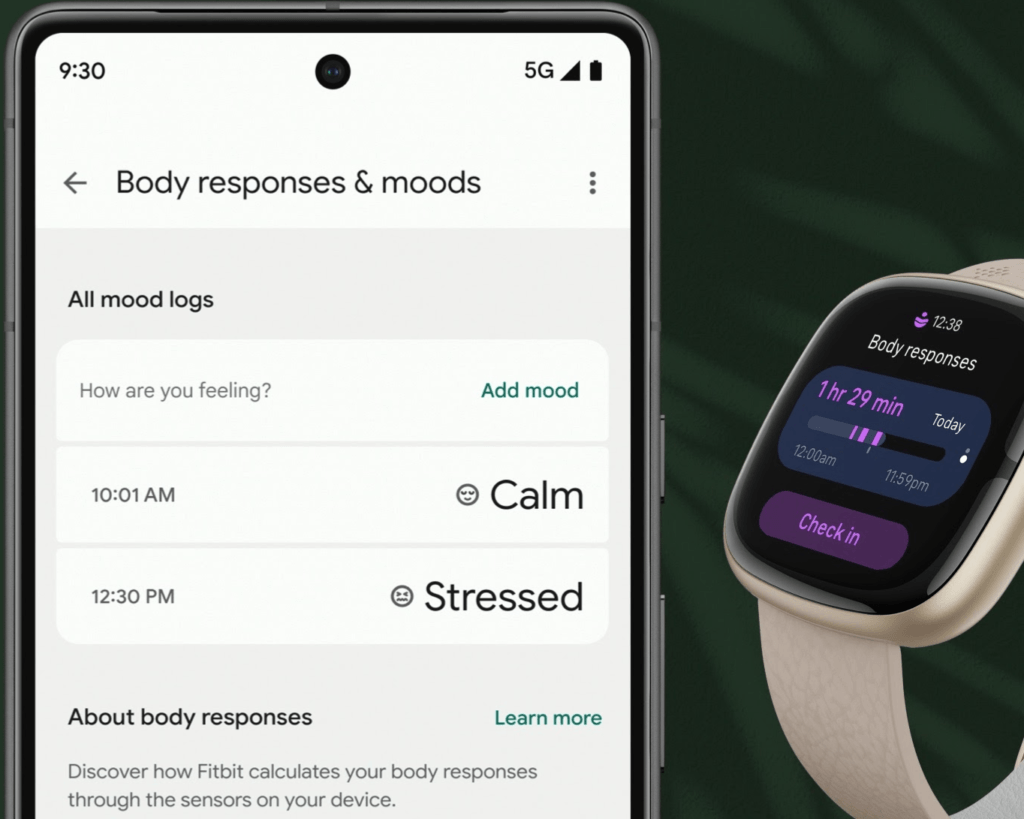
The Sense 2’s defining feature remains its continuous electrodermal activity (cEDA) sensor. Unlike heart rate variability or subjective stress scores alone, cEDA tracks physiological stress responses throughout the day, identifying moments when the body shows signs of heightened arousal.
In practice, this allows users to:
- Identify stress patterns tied to work, travel, or training
- Correlate stress responses with sleep quality and recovery
- Build awareness around non-obvious stressors
Even in 2026, very few consumer wearables offer continuous stress tracking at this level. While competitors may estimate stress indirectly, Fitbit’s cEDA approach remains one of the most tangible implementations of stress awareness available to consumers.
Sleep Tracking and Recovery Insights
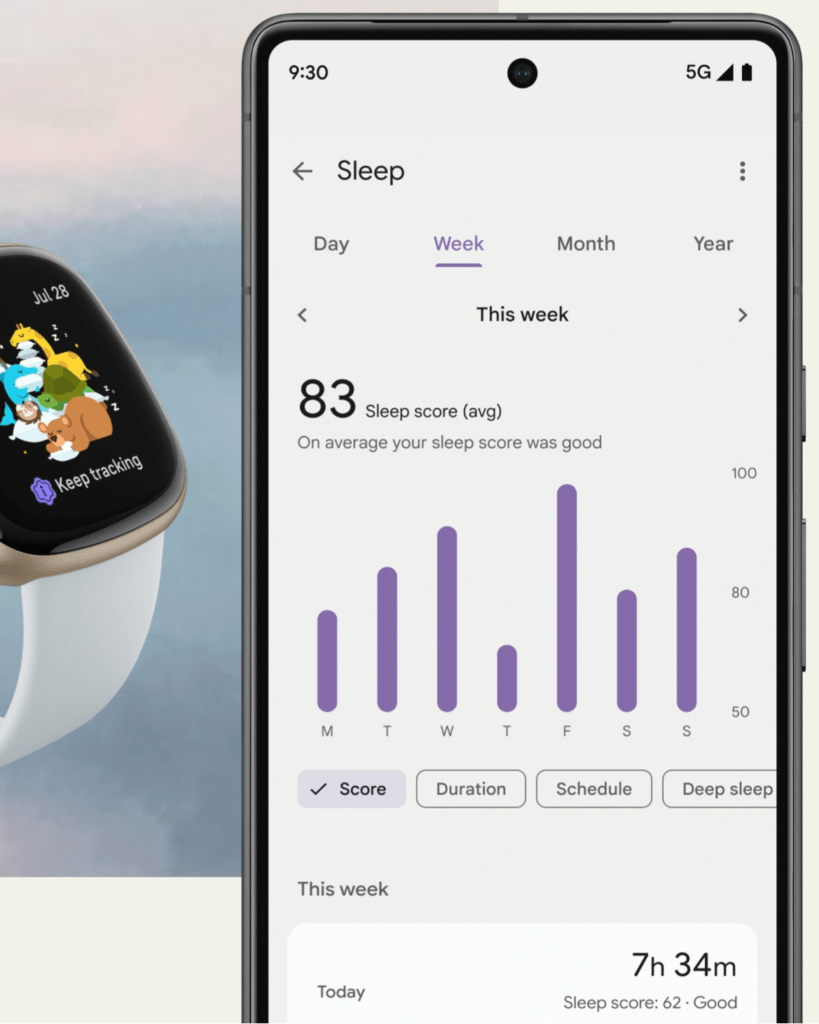
Sleep remains one of the Fitbit Sense 2’s most compelling strengths, particularly for users focused on long-term recovery rather than single-night optimization. The device combines nightly Sleep Scores with Fitbit’s monthly Sleep Profile, translating raw sleep-stage data into practical insights across ten core sleep metrics.
By surfacing patterns in light, deep, and REM sleep—and contextualizing them over time—the Sense 2 helps users understand not just how they slept, but why their sleep quality changes. While deeper analysis is unlocked through Fitbit Premium, even the free experience delivers meaningful visibility into sleep consistency, recovery trends, and overall sleep health in 2026.
Heart Health and ECG
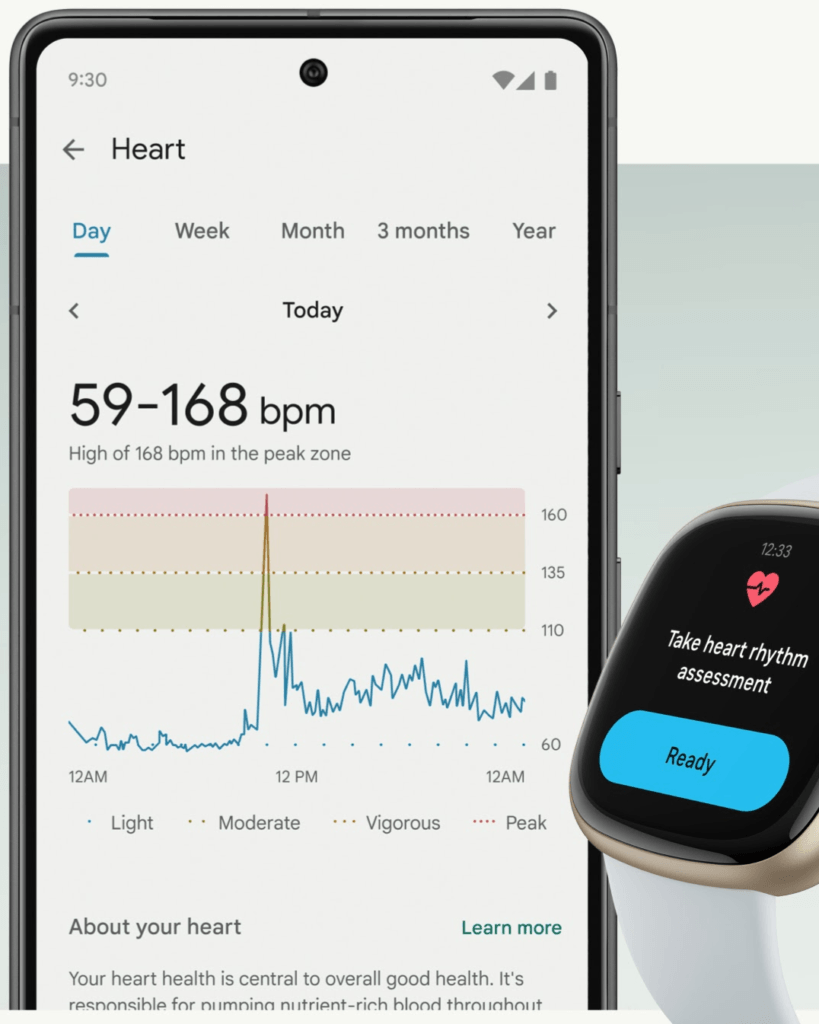
The Sense 2 includes ECG functionality for detecting signs of atrial fibrillation, along with continuous heart rate monitoring and heart rate variability trends.
While ECG use cases are inherently limited for most users, the value lies in trend monitoring and peace of mind, particularly for aging users or those with a family history of heart issues. In this regard, the Sense 2 remains competitive with newer devices.
Sleep, SpO₂, and Skin Temperature
Sleep tracking continues to be one of Fitbit’s strongest domains.
The Sense 2 delivers consistent sleep stage breakdowns, sleep duration tracking, and recovery-oriented metrics. Skin temperature variation and SpO₂ trends add contextual depth, particularly for identifying illness, overtraining, or lifestyle disruptions.
Importantly, Fitbit presents these metrics as trends rather than diagnoses, which aligns with best practices in consumer health technology.
A Holistic Health Picture
What sets the Sense 2 apart is not any single metric, but how these signals work together. Stress, sleep, heart rate, and activity data are integrated into a coherent narrative that supports long-term health awareness—rather than daily performance optimization.
Fitness and Activity Tracking Performance

The Fitbit Sense 2 is a capable fitness tracker, though it is not designed for elite athletic performance.
It supports a wide range of activity modes, automatic workout detection, and built-in GPS for outdoor activities. For walking, running, cycling, and general fitness routines, tracking accuracy is reliable and consistent.
However, athletes accustomed to advanced training metrics—such as power zones, detailed recovery analytics, or training load management—will find the Sense 2 limited. Fitbit’s approach emphasizes accessibility and clarity rather than depth and granularity.
In 2026, the Sense 2 remains best suited for:
- General fitness enthusiasts
- Recreational runners and cyclists
- Users who value consistency over performance optimization
For competitive athletes, Garmin 265 and similar platforms remain better aligned with training-centric goals.
Battery Life and Charging: A Persistent Advantage

Battery life is one of the most enduring strengths of Fitbit Sense 2.
In typical use—health tracking, notifications, sleep monitoring, and occasional GPS—the device consistently delivers five to six days of battery life. Even with heavier usage, multi-day performance remains achievable.
In a market where many smartwatches still require daily charging, this advantage cannot be overstated. Longer battery life enables:
- Continuous overnight tracking without compromise
- Reduced charging anxiety
- A more passive, less intrusive wearable experience
For health-first users, this alone can outweigh several missing smartwatch features.
For users prioritizing stress, sleep, and heart health in one device, the Fitbit Sense 2 remains widely available through Amazon or AliExpress.
View Fitbit Sense 2 on Amazon View Fitbit Sense 2 on AliExpressFitbit App Experience and Software Evolution in 2026
App Design and Usability
The Fitbit app has evolved significantly under Google’s stewardship. Navigation is cleaner, data presentation is more streamlined, and health trends are easier to interpret at a glance.
Fitbit continues to excel at longitudinal data visualization, making it easy to understand how sleep, stress, and activity patterns evolve over weeks and months.
Fitbit Premium: Value Assessment
Fitbit Premium remains a point of debate. Many advanced insights, guided programs, and readiness metrics sit behind the subscription paywall.
For users deeply engaged in health optimization, Premium can add value. Casual users, however, may find the free experience sufficient—particularly if their primary goal is awareness rather than coaching.
Google Integration and AI Health Coaching
By 2026, Google account integration is mandatory for Fitbit users. While initially controversial, this transition enables deeper AI-driven health insights and more personalized guidance.
The Fitbit Sense 2 benefits from these software enhancements despite unchanged hardware—extending its lifespan in a way that purely hardware-driven wearables cannot match.
Data Privacy and User Control
Fitbit Sense 2 users retain clear control over their personal health data through Google account integration, with options to export, delete, or manage data collected by the device. Encryption, optional features, and separation from Google Ads ensure sensitive metrics remain secure while supporting AI-driven insights and personalized guidance.
Data Privacy and User Control
Fitbit Sense 2 gives users clear control over their personal health data, with options to export, delete, or manage metrics collected by the device. Its encrypted transmissions, optional features, and separation from Google Ads help keep sensitive information secure while enabling AI-driven insights and personalized guidance. Learn more about best practices for managing wearable data in our wearable data privacy guide .
Fitbit Sense 2 Smartwatch Features: What You Get—and What You Don’t
The Fitbit Sense 2 offers essential smartwatch functionality:
- Notifications and call alerts
- Contactless payments via Google Wallet
- Basic voice interactions
However, it deliberately excludes:
- Third-party apps
- On-device music storage
- Rich smart interactions
This makes the Fitbit Sense 2 a poor choice for users seeking a “mini smartphone on the wrist.” For those who prefer fewer distractions, this limitation is a feature—not a flaw.
Fitbit Sense 2 vs. Modern Alternatives (2026)
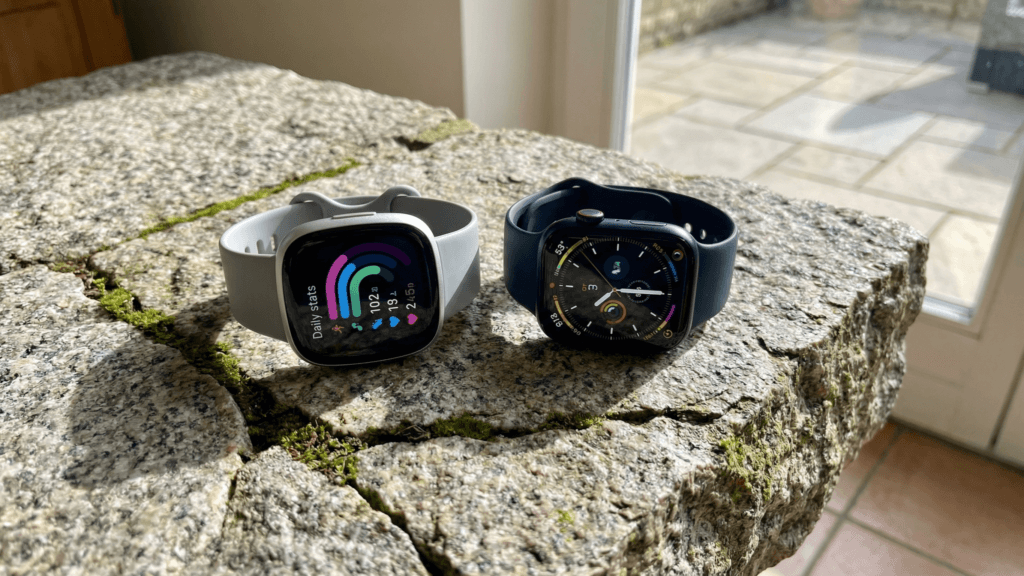
Compared to newer devices, Fitbit Sense 2 occupies a distinct niche:
- Versus Apple Watch: Better battery life, fewer features
- Versus Pixel Watch: More health depth, less smartwatch polish
- Versus Garmin: Better stress insights, weaker performance metrics
Its value lies not in competing directly, but in offering a calmer, health-centric alternative.
Premium Smartwatch Comparison
When considering premium smartwatches, the Apple Watch Series 10 vs Fitbit Sense 2 comparison highlights how the Sense 2 emphasizes long battery life and wellness insights over a full third-party app ecosystem, making it a health-first choice.
Real-World Ownership: Long-Term User Perspectives
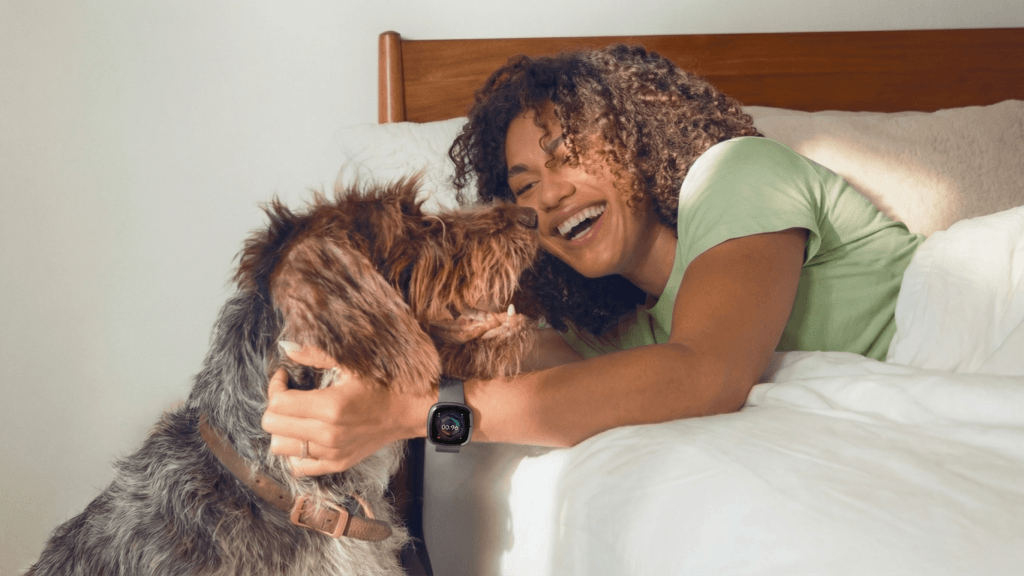
For users who have worn the Fitbit Sense 2 over months or even years, the device earns praise for delivering reliable health insights, long battery life, and comfortable day-to-day wearability. At the same time, long-term ownership surfaces practical trade-offs—such as limited feature expansion, occasional syncing issues, and minor hardware concerns—that highlight the importance of understanding the Sense 2’s health-first focus before purchase.
Long-term users consistently praise the Sense 2 for:
- Battery life
- Sleep and stress insights
- Comfort and wearability
Criticisms tend to focus on:
- Limited feature expansion
- Occasional sync issues
- Hardware durability concerns in some cases
These tradeoffs reinforce the importance of aligning expectations with the device’s core purpose.
Who Should Buy the Fitbit Sense 2 in 2026—and Who Shouldn’t
The Fitbit Sense 2 remains a strong choice for users who prioritize holistic wellness, stress management, and reliable passive tracking, while offering multi-day battery life for uninterrupted monitoring. At the same time, it may be less suitable for those seeking extensive app ecosystems, advanced customization, or features tailored to competitive athletes, helping readers align expectations with the device’s health-first design.
Ideal for:
- Wellness-focused professionals
- Stress-aware individuals
- Users who value battery life and passive tracking
Not ideal for:
- Power users seeking apps and customization
- Competitive athletes
- Users deeply invested in Apple or Wear OS ecosystems
Fitbit Ecosystem Options
For users considering alternatives within Fitbit’s ecosystem, the Fitbit Inspire 3 offers a lighter, budget-friendly option focused on activity tracking, while the Sense 2 provides a more comprehensive stress, sleep, and heart health monitoring experience.
For users prioritizing stress, sleep, and heart health in one device, the Fitbit Sense 2 remains a well-rounded option in 2026.
Check availability on Amazon Check availability on AliExpressFrequently Asked Questions: Fitbit Sense 2 (2026)
Is the Fitbit Sense 2 still worth buying in 2026?
Yes. The Fitbit Sense 2 is still worth buying in 2026 for users who prioritize health insights, stress tracking, sleep analysis, and multi-day battery life over smartwatch apps and advanced athletic metrics.
Who is the Fitbit Sense 2 best for?
The Fitbit Sense 2 is best for wellness-focused users, professionals managing stress, and anyone who wants continuous health tracking with minimal charging and fewer smartwatch distractions.
Does the Fitbit Sense 2 require a subscription?
No. The Fitbit Sense 2 functions without a subscription, but some advanced insights, readiness scores, and guided programs require a Fitbit Premium subscription.
How accurate is Fitbit Sense 2 health tracking?
Fitbit Sense 2 health tracking is generally accurate for consumer wearables. Heart rate, sleep stages, and stress trends are reliable for identifying long-term patterns, but features like ECG, SpO₂, and skin temperature are intended for wellness insights—not medical diagnosis.
How does the Fitbit Sense 2 compare to newer smartwatches?
Compared to newer smartwatches, the Fitbit Sense 2 offers longer battery life and deeper stress tracking but fewer smart features, no third-party apps, and limited on-device interactions.
Is the Fitbit Sense 2 suitable for athletes?
The Fitbit Sense 2 is suitable for general fitness and recreational activity tracking. Competitive athletes or users focused on performance metrics and training load may prefer dedicated fitness watches.
What should buyers know before purchasing the Fitbit Sense 2?
Buyers should know that the Fitbit Sense 2 focuses on health and wellness rather than smartwatch apps, requires a Google account for use, and relies heavily on the Fitbit app for insights and analysis.
Final Verdict: Why the Fitbit Sense 2 Still Matters in 2026
The Fitbit Sense 2 is no longer cutting-edge—and it does not try to be. Instead, it represents a mature, focused approach to wearable health technology.
In 2026, its relevance comes from clarity of purpose: delivering meaningful health insights, minimizing friction, and supporting long-term wellness without constant attention. For users who value understanding their body over interacting with their watch, the Fitbit Sense 2 remains a compelling and credible choice.
For WearableFitnessTech.com, the Fitbit Sense 2 stands as a reminder that progress in wearables is not always about more features—but about better alignment with human needs. After reviewing the Fitbit Sense 2 stress, sleep, and heart health capabilities, it remains one of the most reliable health-first smartwatches in 2026.
For readers ready to invest in long-term wellness tracking, Fitbit Sense 2 is available through Amazon.
View Fitbit Sense 2 on Amazon View Fitbit Sense 2 on AliExpress