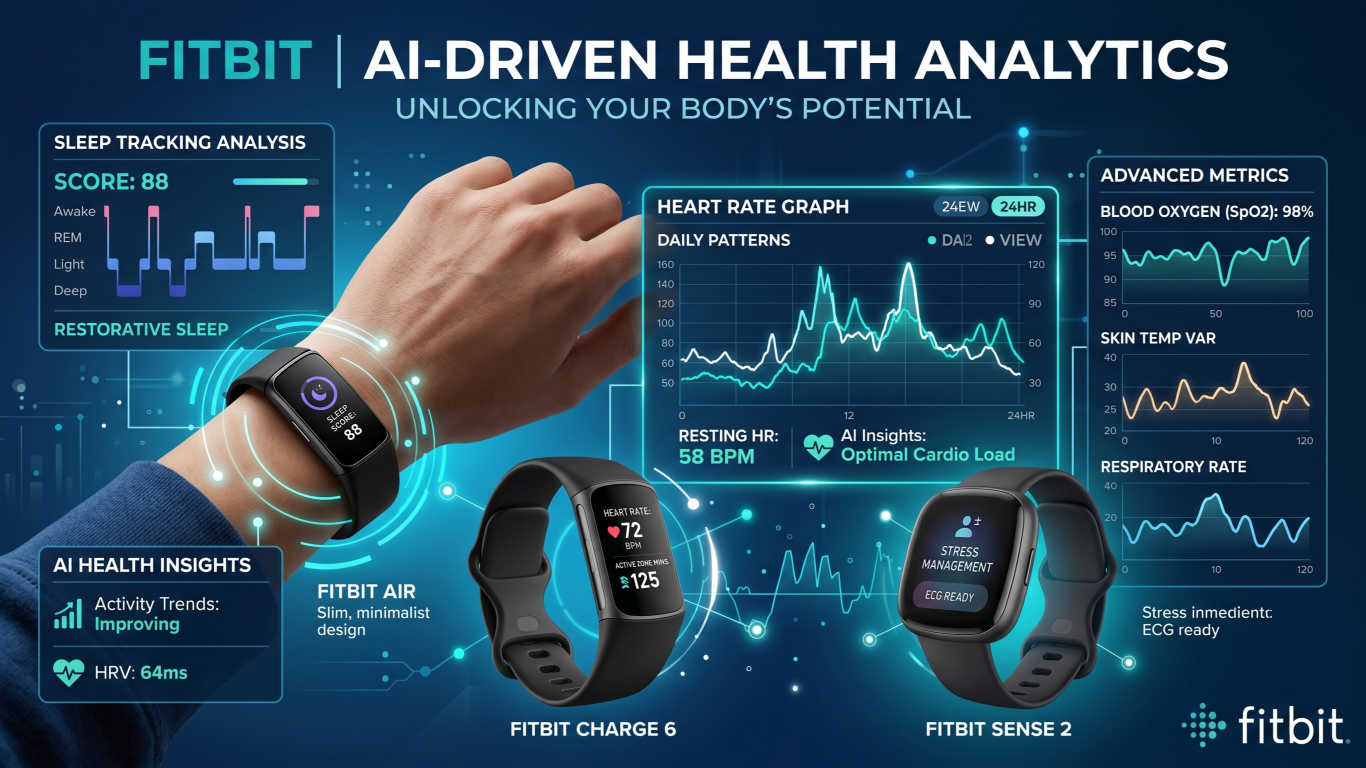
Fitbit fitness trackers have evolved far beyond simple step counters. Today, the Fitbit ecosystem sits at the intersection of wearable fitness technology, AI-powered health insights, sleep analytics, stress tracking, and everyday wellness monitoring.
Since becoming part of Google, Fitbit has increasingly shifted toward a smarter, more connected health platform—one designed not just to collect data, but to help users better understand their bodies and daily habits.
Whether you are looking for the best Fitbit for sleep tracking, stress management, weight loss, or general fitness, the modern Fitbit lineup now includes a wide range of devices built for different types of users.
From lightweight everyday trackers like the Fitbit Inspire series to wellness-focused devices like the Fitbit Sense lineup—and newer AI-driven wearable concepts such as Fitbit Air—the Fitbit ecosystem continues to play a major role in the future of wearable health technology.
This guide explores:
- The current Fitbit lineup
- Which Fitbit devices are best for different users
- Fitbit Premium and AI health features
- Fitbit vs Garmin, Apple Watch, Whoop, and Oura
- Fitbit accuracy and wearable limitations
- The future of Fitbit under Google
- And how Wearable Fitness Tech evaluates Fitbit devices using the proprietary WFT Wearable Evaluation Framework
Fitbit at a Glance
| Best Known For | Sleep, wellness, and everyday health tracking |
| Ideal User | Health-focused users seeking simplicity and wearable insights |
| Ecosystem | Google + Fitbit |
| Main Strength | Easy-to-understand health insights |
| Premium Platform | Fitbit Premium |
| Main Competitors | Apple Watch, Garmin, Whoop, Oura |
How This Page Is Structured
What is Fitbit?
Fitbit began as one of the original consumer fitness tracking companies, helping popularize step counting and wearable activity monitoring long before smartwatches became mainstream.
Over time, Fitbit expanded into:
- heart rate tracking,
- sleep monitoring,
- stress management,
- readiness and recovery metrics,
- and wellness-focused wearable analytics.
Today, Fitbit operates as part of the broader Google hardware and AI ecosystem.
That transition matters because modern Fitbit devices increasingly focus on:
- intelligent health interpretation,
- AI-powered recommendations,
- passive wellness tracking,
- and long-term behavior change.
Rather than overwhelming users with raw data, Fitbit’s ecosystem is designed to simplify health insights into understandable daily guidance.
This reflects a larger industry trend discussed in our internal feature on: CES 2026 Wearable Trends.
The Fitbit Product Ecosystem in 2026
The Fitbit lineup now spans multiple wearable categories, from lightweight fitness bands to smartwatch-style wellness devices.
| Device | Best For | Key Strength |
|---|---|---|
| Fitbit Air | Lightweight AI tracking | Passive wellness insights |
| Fitbit Inspire 3 | Beginners & budget users | Simplicity & comfort |
| Fitbit Sense 2 | Stress & wellness tracking | Advanced wellness sensors |
| Fitbit Charge Series | Balanced fitness tracking | Everyday health metrics |
| Pixel Watch | Smartwatch users | Deep Google integration |
The growing diversity of Fitbit fitness trackers reflects an important shift in the wearable industry:
users increasingly want devices that blend into daily life while still delivering meaningful health insights.
Best Fitbit Fitness Trackers by Use Case
Choosing the best Fitbit fitness tracker is no longer just about counting steps or tracking workouts. The modern Fitbit ecosystem now includes devices optimized for different types of users—from sleep-focused wellness enthusiasts and beginners seeking simplicity to recovery-conscious users looking for stress insights and athletes wanting balanced performance tracking.
The table below gives you a quick glance at each use case, the recommended Fitbit and what it is best for.
| Use Case | Recommended Fitbit | Best For |
|---|---|---|
| Beginners | Fitbit Inspire 3 | Simplicity, comfort, and easy daily wellness tracking |
| Everyday Smartwatch Users | Fitbit Versa Series | Balanced smartwatch functionality with wellness tracking |
| Sleep Tracking | Fitbit Sense 2 | Advanced sleep insights and recovery-focused wellness tracking |
| Stress Tracking | Fitbit Sense 2 | Stress monitoring, mindfulness, and wellness-focused recovery insights |
| Athletes & Fitness Users | Fitbit Charge Series | Balanced fitness tracking, cardio monitoring, and workout analytics |
| Apple Watch Alternative | Fitbit Sense 2 | Wellness-first wearable experience with fewer distractions |
That is why the “best Fitbit” ultimately depends on:
- your health goals,
- preferred wearable experience,
- comfort requirements,
- and the type of insights you actually want from your device.
Some Fitbit devices prioritize:
- lightweight everyday wearability,
- while others focus on:
- sleep intelligence,
- stress management,
- recovery analytics,
- or smartwatch-style functionality.
In the sections below, we break down the best Fitbit devices by specific use case, including:
- who each device is best suited for,
- where it performs particularly well,
- and how it fits into the broader Fitbit ecosystem in 2026.
Best Fitbit for Beginners: Fitbit Inspire 3

For most first-time wearable users, the Fitbit Inspire 3 remains one of the best entry points into the Fitbit ecosystem.
One of the biggest reasons is simplicity.
Many modern wearables overwhelm users with:
- constant notifications,
- complicated dashboards,
- and excessive metrics.
The Inspire 3 takes a much more approachable approach by focusing on:
- comfort,
- battery life,
- ease of use,
- and core wellness tracking.
Its lightweight form factor also makes it extremely easy to wear consistently—which is one of the most important factors in long-term wearable success.
The Inspire 3 is particularly well suited for users who want:
- basic activity tracking,
- sleep insights,
- heart rate monitoring,
- and gentle wellness awareness
without the complexity of a full smartwatch.
Why It Stands Out
- Beginner-friendly experience
- Lightweight and comfortable
- Excellent battery life
- Easy-to-understand insights
- Affordable Fitbit entry point
Learn more from our detail review of Fitbit Inspire 3 as the best affordable wearable fitness tracker under $100.
Best Fitbit for Everyday Smartwatch Users: Fitbit Versa Series
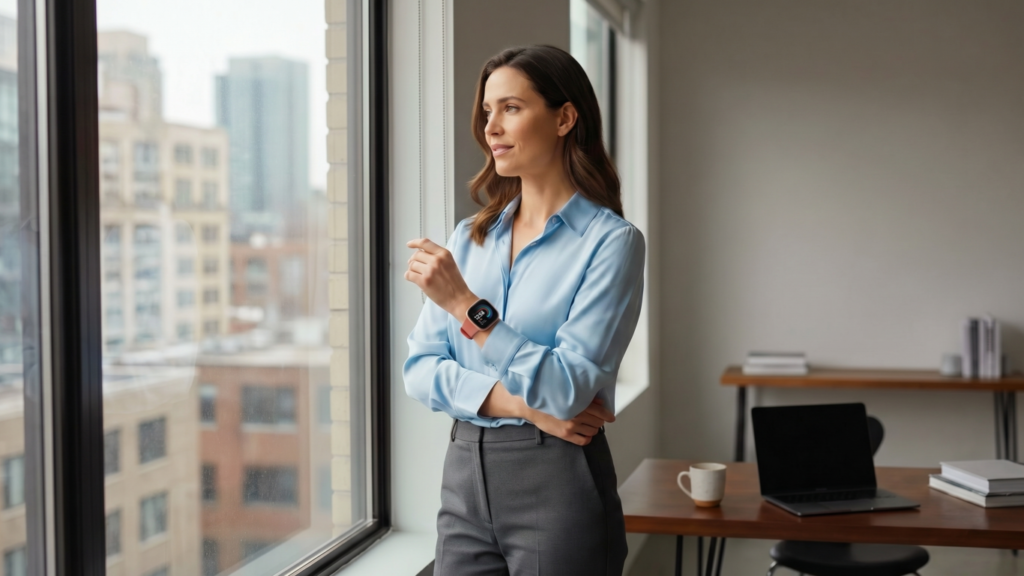
The Fitbit Versa series remains one of the most balanced wearable experiences in the Fitbit ecosystem, combining:
- wellness tracking,
- lightweight smartwatch functionality,
- fitness monitoring,
- and strong battery life
into a more approachable everyday wearable.
Unlike fitness bands that focus primarily on tracking or premium devices centered heavily around wellness analytics, the Versa lineup is designed for users who want a little bit of everything:
- sleep tracking,
- notifications,
- workouts,
- heart rate monitoring,
- wellness insights,
- and smartwatch convenience
without the complexity of a full smartwatch ecosystem.
The Versa series is particularly appealing for users who:
- want a more lifestyle-oriented Fitbit,
- prefer smartwatch aesthetics,
- and value simplicity over advanced athletic analytics.
Why It Stands Out
- Balanced smartwatch-style experience
- Comfortable everyday wearability
- Strong battery life
- Wellness + lifestyle functionality
- Beginner-friendly Fitbit ecosystem
Learn more from our comprehensive comparison review of Fitbit Versa 4 vs Apple Watch Series 8.
Best Fitbit for Sleep Tracking: Fitbit Sense 2
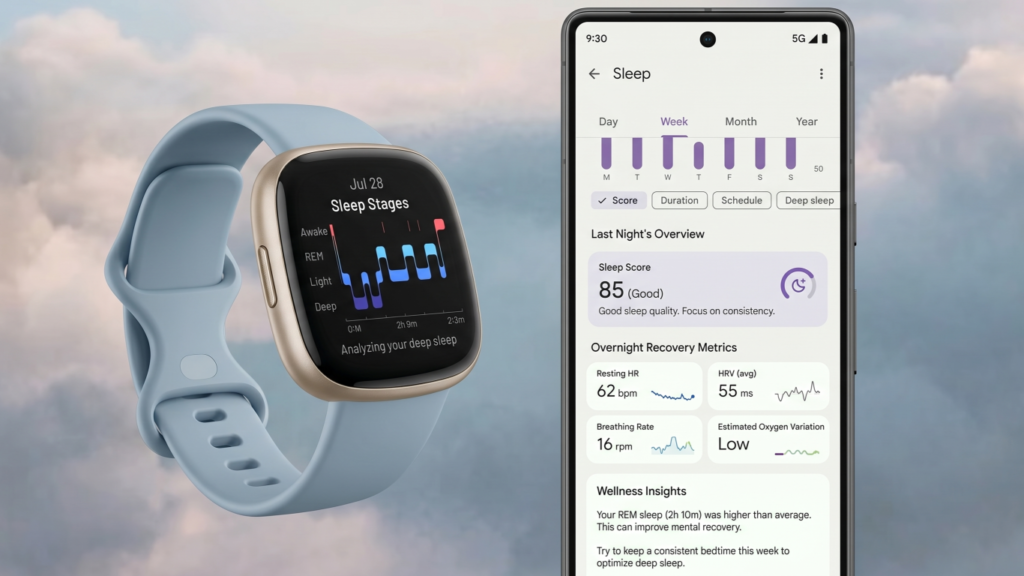
For users focused on improving sleep quality and understanding long-term recovery trends, the Fitbit Sense 2 remains one of the strongest Fitbit devices available.
While many wearables now offer basic sleep tracking, the Sense 2 goes much deeper by combining:
- sleep stage analysis,
- Sleep Score,
- stress monitoring,
- overnight heart rate trends,
- and recovery-oriented wellness insights.
What makes the Sense 2 particularly compelling is Fitbit’s ability to present complex health data in a relatively approachable and beginner-friendly way. Rather than overwhelming users with raw metrics, the Fitbit ecosystem focuses heavily on translating sleep data into understandable behavioral guidance.
The Sense 2 is especially well suited for users interested in:
- sleep optimization,
- stress reduction,
- nervous system awareness,
- and general wellness tracking.
Its lightweight design also makes it more comfortable for overnight wear compared to many larger smartwatches.
Why It Stands Out
- Advanced sleep analytics
- Sleep Score and Sleep Profile
- Comfortable overnight wearability
- Strong wellness-focused ecosystem
- Fitbit Premium sleep insights
Learn more from our Fitbit Sense 2 Review.
Best Fitbit for Stress Tracking: Fitbit Sense 2
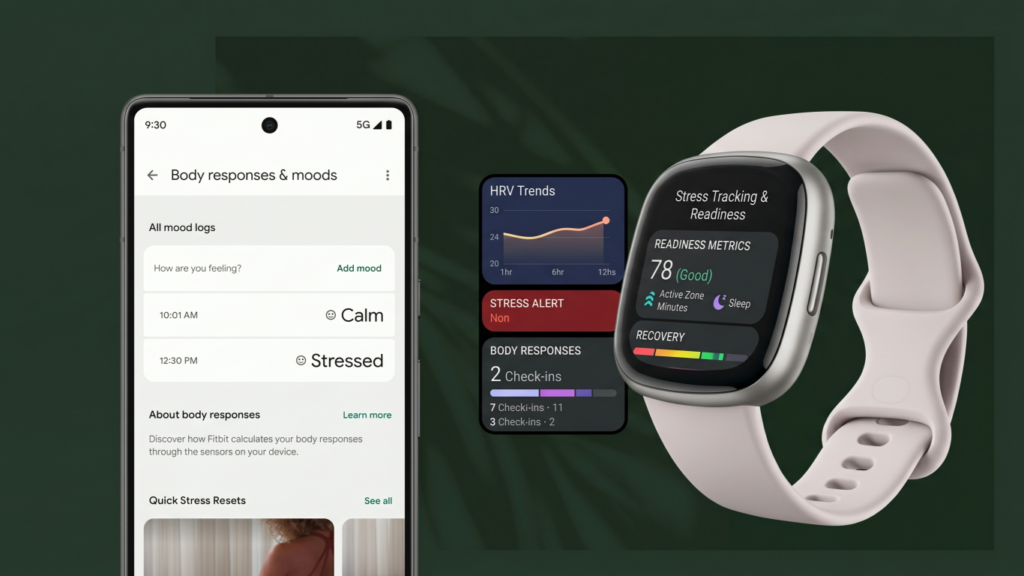
The Fitbit Sense 2 is also currently the strongest Fitbit device for stress tracking and wellness-focused recovery monitoring.
This is largely due to Fitbit’s integration of:
- cEDA stress sensors,
- mindfulness features,
- body-response tracking,
- and wellness-oriented behavioral insights.
Unlike traditional fitness trackers that focus almost exclusively on exercise metrics, the Sense lineup represents Fitbit’s broader shift toward nervous-system-aware wellness tracking.
This reflects a major trend in the wearable industry:
wearables are increasingly moving beyond fitness into:
- stress management,
- recovery optimization,
- and long-term wellness monitoring.
The Sense 2 is ideal for users who:
- feel overwhelmed by constant stress,
- want greater awareness of daily recovery patterns,
- or are interested in wearable-guided wellness habits.
Why It Stands Out
- cEDA stress response monitoring
- Wellness-focused sensors
- Guided mindfulness features
- Recovery-oriented insights
- Strong Fitbit wellness ecosystem
Learn more from our Fitbit Sense 2 Review.
Best Fitbit for Athletes: Fitbit Charge 6
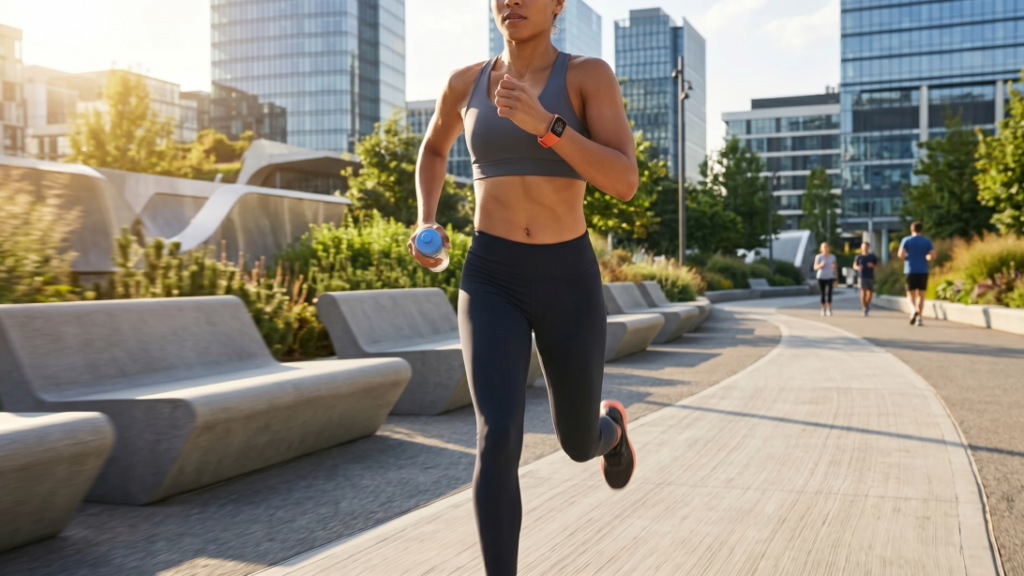
For users who want more advanced fitness tracking without fully committing to a sports-focused smartwatch ecosystem, the Fitbit Charge series offers one of the best balances in the Fitbit lineup.
The Charge lineup sits in an interesting middle ground between:
- lightweight wellness bands,
- and feature-heavy smartwatches.
It provides:
- exercise tracking,
- cardio monitoring,
- Active Zone Minutes,
- GPS features,
- and performance-oriented metrics
while still maintaining Fitbit’s relatively approachable user experience.
The Charge series is particularly appealing for:
- runners,
- gym users,
- cyclists,
- and users seeking everyday fitness accountability.
While serious endurance athletes may still prefer Garmin’s deeper training ecosystem, the Charge series remains an excellent option for users wanting:
- practical fitness tracking,
- wellness insights,
- and better overall health awareness.
Why It Stands Out
- Balanced fitness tracking
- GPS and cardio monitoring
- Better workout features than entry-level Fitbit bands
- Lightweight compared to most smartwatches
- Strong battery efficiency
Best Fitbit Alternative to Apple Watch: Fitbit Sense 2
For users who want health insights and wellness tracking without the distraction-heavy experience of a traditional smartwatch, the Fitbit Sense 2 is arguably one of the best Apple Watch alternatives in the Fitbit ecosystem.
This distinction matters more than ever in 2026.
Many users are beginning to move away from:
- constant notifications,
- screen fatigue,
- and app overload,
instead preferring wearables that support:
- passive wellness,
- recovery awareness,
- and healthier digital habits.
The Fitbit Sense 2 focuses more heavily on:
- sleep,
- stress,
- recovery,
- and wellness insights
than productivity and app ecosystems.
It also offers significantly better battery life than most smartwatches, making it more practical for continuous health monitoring.
The Sense 2 is particularly well suited for users who:
- prioritize wellness over productivity,
- want fewer distractions,
- or are transitioning away from smartwatch dependency.
Why It Stands Out
- Wellness-first wearable philosophy
- Better battery life than most smartwatches
- Strong sleep and stress tracking
- Lightweight compared to many smartwatches
- Less distracting user experience
Learn more from our Fitbit Sense 2 Review.
Explore more in our comparison of Apple Watch Series 10 vs Fitbit Sense 2.
Fitbit Air and the Rise of Screenless Wellness Wearables
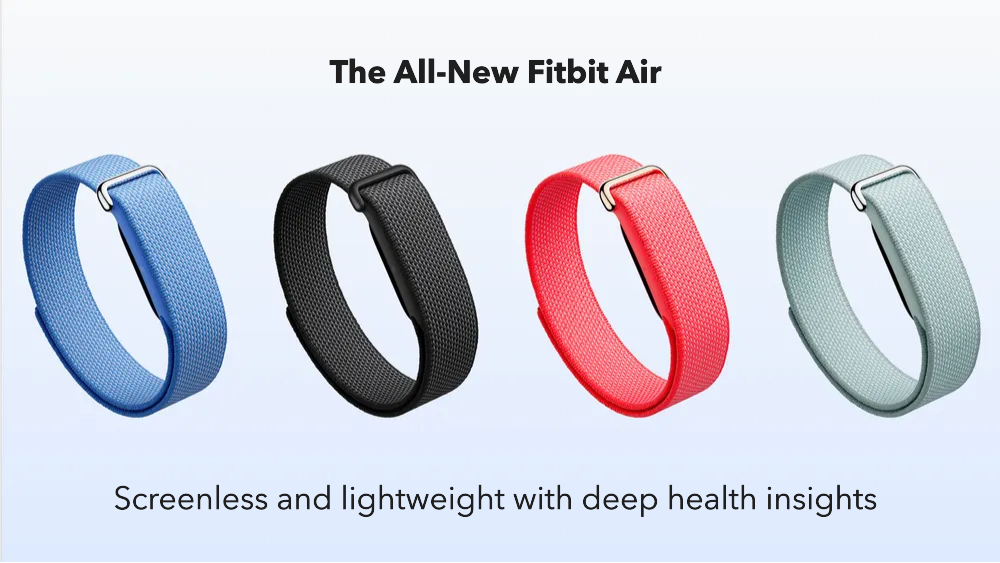
The Fitbit Air may represent one of the most important strategic shifts in the Fitbit ecosystem in years—not because of what it adds, but because of what it removes.
Unlike traditional smartwatches that constantly compete for attention through:
- notifications,
- apps,
- alerts,
- and screen interactions,
the Fitbit Air appears to embrace an entirely different philosophy:
passive wellness through screenless wearable design.
Officially described as a “screenless activity tracker” with AI-powered coaching, sleep tracking, heart rate monitoring, and up to 7 days of battery life, the Fitbit Air reflects a broader movement emerging across the wearable technology industry:
- lighter devices,
- calmer interfaces,
- and low-friction health tracking experiences.
This trend aligns closely with one of the major wearable themes identified in our article on:
CES 2026 Wearable Trends, where the industry is increasingly moving toward:
- passive sensing,
- wearable intelligence,
- ambient computing,
- and AI-driven wellness guidance.
Rather than constantly asking users to look at another screen, devices like Fitbit Air are designed to operate quietly in the background—collecting health signals continuously while allowing the intelligence layer to live inside the software ecosystem.
Why Screenless Wearables Are Becoming More Important
For years, wearable technology largely followed the same trajectory as smartphones:
- more screens,
- more notifications,
- more apps,
- and more digital interaction.
But many users are now experiencing:
- screen fatigue,
- notification overload,
- digital burnout,
- and increasing frustration with devices that constantly demand attention.
This has created growing demand for a different category of wearable:
devices that support health quietly rather than interrupt constantly.
The Fitbit Air appears designed around that exact idea.
By removing the screen entirely, Fitbit Air shifts the wearable experience away from:
- distraction,
- visual overload,
- and app-centric interactions,
toward:
- passive tracking,
- comfort,
- long-term wearability,
- and background wellness awareness.
This broader movement is sometimes referred to as:
- calm technology,
- ambient wellness,
- or passive health tracking.
And it may represent one of the next major evolutions in consumer wearables.
The Shift from Fitness Tracking to Health Intelligence
The Fitbit Air also reflects a much larger transformation happening across the wearable industry:
the transition from raw data collection to AI-powered health interpretation.
Earlier generations of wearables focused heavily on:
- step counts,
- calories,
- and workout statistics.
Modern wearables are increasingly focused on:
- behavioral insights,
- recovery awareness,
- stress patterns,
- sleep quality,
- and personalized wellness guidance.
In this model, the wearable itself becomes less visually dominant, while the intelligence layer becomes more important.
That is why Fitbit Air’s AI-powered coaching may ultimately matter more than the hardware itself.
The device appears designed to function as:
- a lightweight sensor platform,
feeding: - a larger ecosystem of personalized wellness insights.
This aligns closely with the broader “metrics to meaning” trend now shaping wearable technology in 2026.
The future of wearable technology may not be more screens, more notifications, or more apps. Instead, the next generation of wearables may become increasingly invisible—quietly collecting health signals in the background while AI systems transform that data into personalized wellness guidance. The Fitbit Air appears to be one of the clearest examples of this industry shift entering the mainstream wearable market.
Fitbit Air and the Google Health Ecosystem
The launch of Fitbit Air also highlights how deeply Fitbit is now integrated into the broader Google ecosystem.
Rather than operating as a standalone fitness tracker, Fitbit Air appears positioned as part of a larger AI-driven health platform that may eventually include:
- Google AI wellness coaching,
- predictive health recommendations,
- personalized behavioral insights,
- and ecosystem-level health intelligence.
This is strategically important because Google’s scale could help bring:
- passive wellness tracking,
- AI-powered recovery guidance,
- and screenless wearable experiences
into the mainstream consumer market.
Historically, many of these ideas were largely confined to niche wearable categories such as:
- recovery wearables,
- smart rings,
- and subscription-based performance platforms.
Fitbit Air may help make those concepts significantly more accessible to everyday users.
Fitbit Air vs Traditional Smartwatches
One of the most interesting aspects of Fitbit Air is that it does not appear to compete directly with traditional smartwatches at all.
Instead of trying to become:
- a mini smartphone on the wrist,
Fitbit Air appears designed around:
- simplicity,
- comfort,
- battery efficiency,
- and passive wellness support.
This could make it particularly appealing for users who:
- feel overwhelmed by constant notifications,
- want fewer digital distractions,
- prioritize wellness over productivity,
- or simply want a wearable that disappears into everyday life.
In many ways, Fitbit Air may represent a broader rejection of the “always-on” smartwatch philosophy that dominated wearable design over the past decade.
The Future of Passive Health Tracking
The Fitbit Air is part of a much larger wearable industry shift toward:
- passive sensing,
- wearable AI,
- contextual wellness guidance,
- and long-term behavioral health monitoring.
As wearables continue evolving, the industry may increasingly prioritize:
- comfort over complexity,
- intelligence over interfaces,
- and long-term adherence over feature overload.
That makes Fitbit Air more than just another fitness tracker launch.
It may represent an early glimpse into the future direction of mainstream wearable health technology.
Fitbit Premium: Shift Toward AI-Driven Health Guidance
Fitbit Premium has become one of the most important parts of the modern Fitbit ecosystem. This is not simply because it adds more features, but because it fundamentally changes how Fitbit interprets wearable data.
In the early days of fitness tracking, most wearables focused primarily on:
- collecting metrics,
- displaying charts,
- and logging activity.
But as wearable technology has evolved, the industry has increasingly shifted toward a new goal:
transforming health data into actionable guidance.
That transition is exactly where Fitbit Premium now sits within the Fitbit ecosystem.
Rather than functioning as a traditional “subscription add-on,” Fitbit Premium increasingly acts as:
- the intelligence layer,
- the wellness interpretation engine,
- and the behavioral coaching platform
behind modern Fitbit devices.
This is especially important as Fitbit continues integrating more deeply into the broader Google AI and health ecosystem.
One of the biggest challenges in wearable fitness technology is not collecting data—it is helping users understand what the data actually means. Fitbit’s strength has historically been simplifying wearable insights into actionable wellness guidance rather than overwhelming users with complex metrics.
Why Fitbit Premium Matters Strategically
Perhaps the most important thing about Fitbit Premium is what it reveals about the future of wearable technology.
Increasingly, the wearable itself is becoming:
- the sensor layer,
while:
- AI interpretation,
- software intelligence,
- and behavioral coaching
become the real product.
That makes Fitbit Premium more than just a subscription service.
It represents Fitbit’s broader evolution from:
- fitness tracking,
to: - AI-powered health intelligence.
Fitbit Accuracy and Wearable Limitations
Like all consumer wearables, Fitbit devices have limitations.
While Fitbit trackers can provide extremely useful trends and behavioral insights, they are not medical devices and should not replace professional healthcare evaluation.
Areas where Fitbit devices may vary include:
- heart rate precision,
- calorie estimation,
- sleep-stage interpretation,
- recovery scoring,
- and stress measurement.
Wearable data should generally be viewed as:
- directional,
- trend-based,
- and context-dependent.
This is why testing methodology and data interpretation matter.
Learn more from our Wearable Device Accuracy Guide.
Fitbit vs Other Wearable Ecosystems
Fitbit vs Garmin
Garmin generally focuses more heavily on:
- endurance sports,
- training analytics,
- and advanced athletic performance.
Fitbit tends to focus more on:
- wellness,
- accessibility,
- and everyday health insights.
Fitbit vs Apple Watch
The Apple Watch offers a broader smartwatch experience, while Fitbit devices often prioritize:
- simplicity,
- battery life,
- sleep tracking,
- and lightweight wearability.
Fitbit vs Whoop
Whoop emphasizes subscription-based recovery analytics and athlete-focused readiness metrics.
Fitbit offers a more mainstream and beginner-friendly wellness experience.
Fitbit vs Oura Ring
Oura focuses heavily on passive recovery and sleep tracking through a ring form factor.
Fitbit offers broader activity tracking and a more traditional wearable interface.
Frequently Asked Questions
Final Thoughts
The Fitbit ecosystem has evolved far beyond simple fitness tracking. In 2026, Fitbit devices increasingly sit at the intersection of wearable AI, recovery tracking, sleep intelligence, stress management, and passive wellness monitoring. From beginner-friendly fitness bands like the Inspire series to wellness-focused devices like the Sense lineup—and newer screenless wearables like Fitbit Air—Fitbit is helping shape the future of more intelligent, low-friction health technology.
As wearable technology continues moving toward AI-powered health guidance and passive wellness experiences, Fitbit remains one of the most approachable ecosystems for users seeking a balance between simplicity, meaningful health insights, and everyday wearability. Whether you are exploring sleep tracking, stress management, smartwatch alternatives, or the future of screenless wellness devices, the Fitbit ecosystem continues to play an increasingly important role in the future of wearable fitness technology.
Explore More Fitbit Guides & Reviews
Continue exploring the Fitbit ecosystem with our in-depth reviews, comparisons, and wearable technology guides: