How We Assess and Score Fitness Trackers
Choosing the right wearable device has become increasingly complex. Modern fitness trackers and smartwatches can measure everything from heart rate and sleep quality to training load and recovery readiness. While this wealth of data is powerful, it also makes comparing devices difficult without a standard wearable evaluation framework.
At Wearable Fitness Tech, we developed the WFT Wearable Evaluation Framework™ to bring structure and transparency to our wearable technology reviews.
The framework is a structured methodology that evaluates devices across the dimensions that matter most for fitness performance, health insights, and real-world usability.
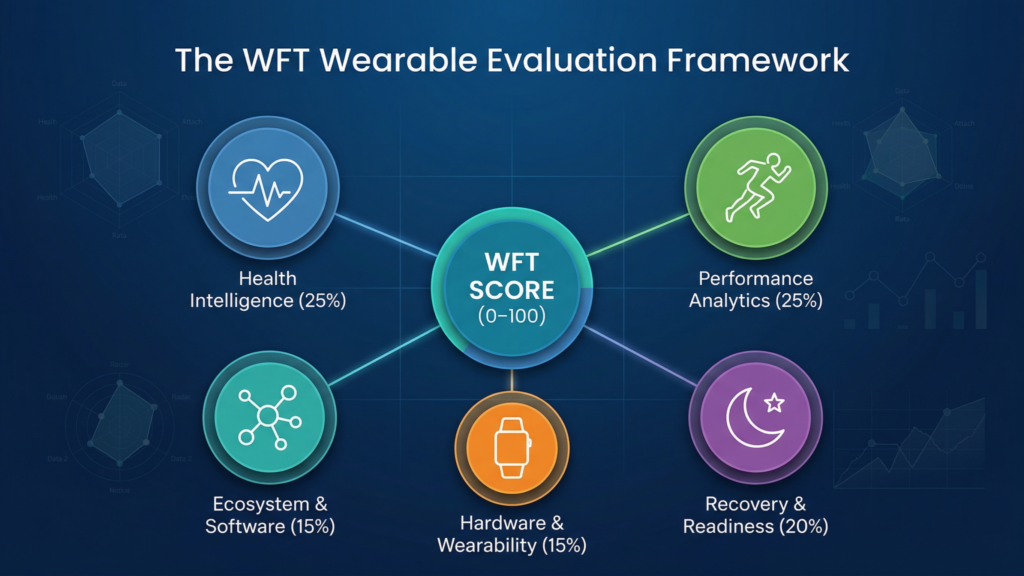
Each device we review receives a WFT Score™ (0–100) based on this evaluation model.
The goal is simple: to provide our readers with a clear, consistent, and evidence-based way to compare wearable devices.
Why Wearable Devices Need a Structured Evaluation Framework
Many wearable reviews focus primarily on:
- feature lists
- marketing claims
- short-term impressions
While these can be helpful, they often fail to answer the most important question:
How well does a device actually perform as a fitness and health tracking tool?
Wearable fitness technology sits at the intersection of several complex domains:
- physiological sensing
- sports performance analytics
- recovery monitoring
- hardware design
- software ecosystems
Evaluating these systems requires more than a simple pros-and-cons list.
The WFT Wearable Evaluation Framework™ was developed to bring a structured analytical approach to wearable device reviews.
By applying the same methodology across devices, we can create fair, consistent comparisons across brands and categories.
The Five Pillars of the WFT Wearable Evaluation Framework™
Every wearable device evaluated on Wearable Fitness Tech is analyzed across five core pillars.
These pillars reflect the capabilities that define modern fitness wearables.
| Evaluation Pillar | Weight | Purpose |
|---|---|---|
| Health Intelligence | 25% | Quality of physiological sensing |
| Performance Analytics | 25% | Training metrics and sports insights |
| Recovery & Readiness | 20% | Sleep and recovery monitoring |
| Hardware & Wearability | 15% | Physical design and battery performance |
| Ecosystem & Software | 15% | App experience and data integration |
Each pillar contributes to the final WFT Score™.
Health Intelligence (25%)
Health sensing is the foundation of modern wearable technology.
This pillar evaluates how effectively a device captures and interprets physiological signals.
Key metrics considered include:
- heart rate monitoring accuracy
- heart rate variability (HRV) tracking
- blood oxygen monitoring (SpO₂)
- ECG capability where available
- stress detection and autonomic indicators
Devices that provide reliable physiological insights receive higher scores in this category.
Examples of devices with strong health tracking capabilities include:
Performance Analytics (25%)
Performance analytics evaluates how well a wearable supports training and athletic performance monitoring.
This pillar focuses on metrics that athletes and active individuals rely on to track progress and optimize workouts.
Evaluation factors include:
- VO₂ max estimation
- training load and workout intensity metrics
- workout analysis depth
- sport profiles and activity modes
- GPS accuracy and reliability
Devices designed specifically for endurance athletes often perform strongly in this category.
Examples include:
- Garmin Forerunner 965
- Polar Vantage V3
Recovery & Readiness (20%)
Recovery monitoring has become one of the fastest-growing areas in wearable technology.
Modern devices increasingly provide insights into how well the body is recovering from training, stress, and sleep.
This pillar evaluates how effectively a wearable tracks and interprets recovery signals.
Key factors include:
- sleep tracking quality
- recovery or readiness scores
- HRV trend analysis
- stress monitoring indicators
Devices with advanced recovery insights often appeal to users focused on training optimization and long-term wellness.
A leading example in recovery-focused wearables is:
Hardware & Wearability (15%)
Even the most advanced wearable technology must be comfortable and practical for daily use.
This pillar evaluates the physical design and real-world usability of the device.
Evaluation factors include:
- battery life and charging frequency
- comfort and ergonomics
- build quality and materials
- water resistance and durability
A wearable device should be capable of continuous tracking without becoming intrusive or inconvenient.
Ecosystem & Software (15%)
The value of wearable devices is heavily influenced by their software platforms.
A device’s mobile app and data ecosystem play a crucial role in how users interpret and act on their data.
This pillar evaluates:
- mobile app usability
- data visualization and insights
- integration with third-party platforms
- frequency of firmware updates
Strong ecosystems help users turn raw data into meaningful health and performance insights.
The WFT Score™
Each wearable device evaluated using the framework receives a WFT Score ranging from 0 to 100.
Scores are derived from weighted evaluations across the five pillars.
Higher scores indicate stronger overall performance across the dimensions that matter most for wearable technology users.
WFT Score™ Interpretation Chart
| Score | Rating |
|---|---|
| 90–100 | Elite Performance Tracker |
| 80–89 | Advanced Fitness Tracker |
| 70–79 | Solid Everyday Tracker |
| 60–69 | Basic Fitness Tracker |
These categories help readers quickly understand how a device compares within the broader wearable landscape.
How the Framework Supports Better Comparisons
The WFT Wearable Evaluation Framework™ allows devices from different categories to be evaluated on a consistent analytical foundation.
For example, a running-focused smartwatch such as the
Garmin Forerunner 965
can be compared against a health-focused wearable such as the
Fitbit Sense 2
or a recovery-focused device like the
Oura Ring.
By evaluating all devices across the same pillars, readers can clearly understand where each device excels and where trade-offs exist.
Our Goal: Objective, Structured Wearable Technology Analysis
Wearable technology continues to evolve rapidly. New devices introduce increasingly sophisticated health sensors and training analytics.
The purpose of the WFT Wearable Evaluation Framework™ is to provide readers with a consistent, transparent, and analytical way to evaluate these technologies.
Rather than relying solely on subjective impressions, our framework enables structured comparisons that help readers make more informed decisions when choosing a wearable device.
Evaluation Methodology and Editorial Standards
The WFT Wearable Evaluation Framework™ is designed to provide structured, consistent analysis of wearable fitness technology.
To maintain objectivity and reliability in our evaluations, Wearable Fitness Tech follows a set of editorial and methodological standards.
Consistent Evaluation Criteria
All devices reviewed on Wearable Fitness Tech are assessed using the same five pillars of the WFT Wearable Evaluation Framework™. This ensures that devices from different manufacturers can be compared on a consistent analytical basis.
Real-World Usage Analysis
Wearable devices are evaluated based on practical usage scenarios including workouts, daily wear, sleep tracking, and app interaction. This approach helps ensure that scores reflect real user experience rather than marketing specifications alone.
Transparent Scoring Structure
Each device receives a WFT Score (0–100) derived from weighted analysis across the five evaluation pillars. While individual scores may vary depending on device capabilities, the framework itself remains consistent across all evaluations.
Editorial Independence
Product evaluations on Wearable Fitness Tech are conducted independently. The WFT Score reflects our analytical assessment of device capabilities within the framework and is not influenced by manufacturers or commercial partnerships.
Continuous Framework Evolution
Wearable technology evolves rapidly. As new sensor technologies and performance metrics emerge, the WFT Wearable Evaluation Framework™ may be refined to ensure that evaluations remain relevant and aligned with advances in wearable performance intelligence.
Explore WFT Scores and Device Reviews
You can explore our full wearable reviews and comparisons to see how devices perform within the WFT Wearable Evaluation Framework™.
Each review includes a detailed WFT Scorecard and analysis of how the device performs across the five evaluation pillars.