WFT Executive Brief
Before diving into the full review, this Executive Brief summarizes our assessment of the Fitbit Air, highlighting its strengths, limitations, and the type of user it is best suited for. Our preliminary ratings are based on publicly available specifications and ecosystem analysis. Final scores are updated following comprehensive hands-on testing using the WFT Wearable Evaluation Framework.
Fitbit Air — At a Glance
- Screenless wellness and activity tracker
- Passive health tracking, sleep monitoring, and AI-powered wellness insights
- Minimalist screenless design reduces digital distractions
- Excellent sleep and everyday wellness tracking
- Up to 7-day battery life
- Deep integration with Fitbit Premium and Google’s AI ecosystem
- Comfortable for continuous 24/7 wear
- Professionals seeking fewer digital distractions
- Users focused on sleep, recovery, and overall wellness
- First-time wearable users
- Anyone embracing digital minimalism
- No on-device display or smartwatch functionality
- Limited real-time workout feedback
- Relies heavily on the Fitbit app and Fitbit Premium for the full experience
- Not designed for elite athletic training
WFT Wearable Evaluation Framework
Our preliminary assessment of Fitbit Air based on publicly available specifications, ecosystem analysis, and the WFT Wearable Evaluation Framework. Final scores will be updated following comprehensive hands-on testing.
| Evaluation Pillar | Weight | Preliminary Rating |
|---|---|---|
| ? Health Intelligence | 25% |
⭐⭐⭐⭐☆
Strong |
| ? Performance Analytics | 25% |
⭐⭐⭐☆☆
Moderate |
| ? Recovery & Readiness | 20% |
⭐⭐⭐⭐☆
Strong |
| ⌚ Hardware & Wearability | 15% |
⭐⭐⭐⭐⭐
Very Strong |
| ☁️ Ecosystem & Software | 15% |
⭐⭐⭐⭐☆
Strong |
WFT Executive Verdict
Fitbit Air represents one of the most significant shifts in wearable technology in recent years. Rather than attempting to compete with increasingly feature-rich smartwatches and advanced fitness trackers, Google has chosen a different path—one centered on passive wellness tracking, AI-powered health insights, and a screenless experience designed to reduce digital distractions.
Its greatest strength lies in its simplicity. By removing the display, Fitbit Air encourages continuous wear, making it particularly well suited for sleep tracking, everyday activity monitoring, and long-term wellness insights. Combined with the Fitbit ecosystem and Fitbit Premium, it has the potential to deliver a more personalized and less intrusive health experience than many traditional wearables.
The trade-off is equally clear. Users seeking advanced athletic performance metrics, smartwatch functionality, or real-time workout feedback will likely find more capable alternatives in devices such as dedicated sports watches or premium smartwatches.
Fitbit Air is best suited for professionals, wellness-focused users, and anyone seeking meaningful health insights without the constant interruptions of a smartwatch. If Google’s continued investment in AI-driven coaching and ambient wellness computing fulfills its promise, Fitbit Air may prove to be one of the most influential wellness wearables in Fitbit’s modern lineup.
Ready to Explore Fitbit Air?
If Fitbit Air sounds like the right fit for your wellness goals, check the latest pricing, availability, and verified customer reviews on Amazon.
View Fitbit Air on Amazon →Introduction
For more than a decade, wearable technology has largely followed the same trajectory: larger displays, more notifications, additional apps, and increasingly smartwatch-like experiences. While these innovations have made wearables more capable, they have also introduced a growing challenge—digital overload.
Many users now find themselves wearing devices designed to improve their health while simultaneously contributing to the very distraction and notification fatigue they are trying to escape.
This is where Fitbit Air enters the conversation.
Fitbit Air is Google’s new screenless wellness wearable that takes a radically different approach to health tracking. Instead of encouraging users to constantly check a display, Fitbit Air focuses on passive health monitoring, AI-powered guidance, and seamless integration into daily life.
At first glance, removing the screen may seem like a step backward. In reality, it may represent one of the most important shifts in wearable technology since the introduction of the smartwatch itself.
As wearable technology evolves toward ambient computing, personalized AI coaching, and passive health intelligence, Fitbit Air positions itself as a device designed to fade into the background while continuously supporting healthier habits.
In this Fitbit Air review, we’ll explore its design philosophy, health tracking capabilities, AI features, Fitbit Premium integration, and whether this screenless fitness tracker represents the future of wellness technology.
What Is Fitbit Air?
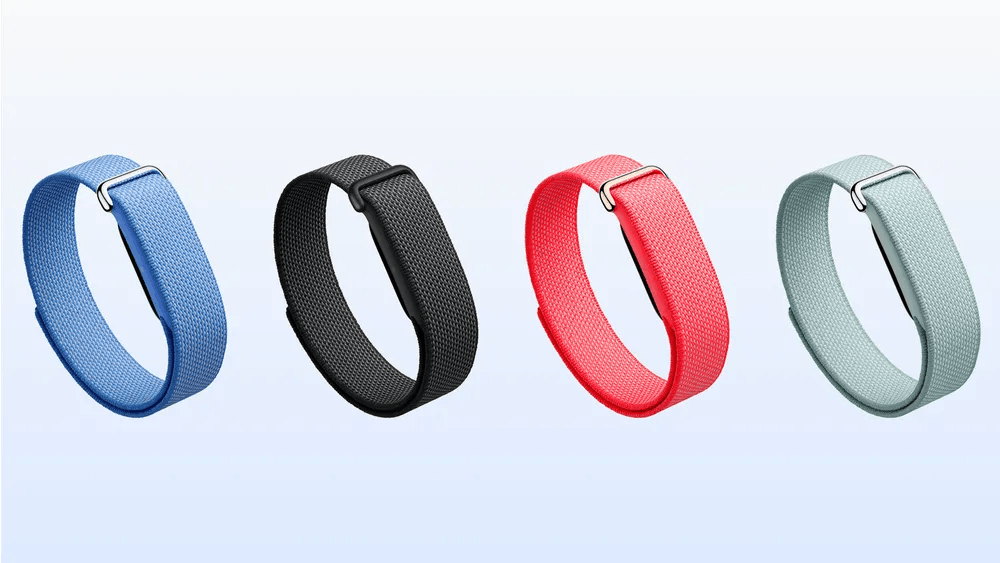
Fitbit Air is a screenless activity tracker designed to provide continuous health and wellness monitoring while minimizing user interaction.
Unlike traditional fitness trackers and smartwatches, Fitbit Air removes the display entirely. Instead, users interact with their health data through the Fitbit app and Google’s growing ecosystem of AI-powered wellness tools.
This design philosophy aligns with a broader movement occurring across the technology industry: the shift from active computing to ambient computing which we explored in detailed in the article CES 2026 Wearable Trends.
Rather than demanding attention throughout the day, ambient devices work quietly in the background, collecting data, identifying trends, and surfacing meaningful insights only when necessary.
Fitbit Air is built around this concept.
Fitbit Air Key Features
- Continuous activity tracking
- Sleep monitoring
- Heart rate tracking
- AI-powered health insights
- Fitbit ecosystem integration
- Fitbit Premium compatibility
- Up to seven days of battery life
- iOS and Android support
The result is a wearable designed not to become another screen in your life, but rather a passive wellness companion that operates largely behind the scenes.
Fitbit Air Design and Wearability
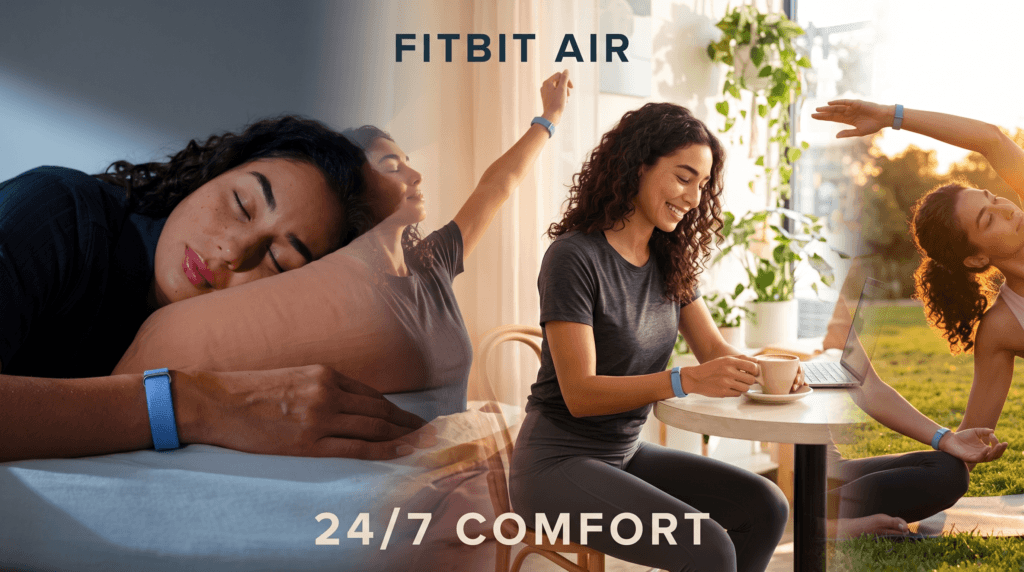
One of the most important aspects of any wearable device is whether users are willing to wear it consistently.
A fitness tracker can offer exceptional health insights, but if it is uncomfortable, intrusive, or requires frequent charging, adherence inevitably suffers.
This is where Fitbit Air’s minimalist design may become one of its greatest strengths.
Designed to Disappear
Traditional smartwatches often introduce friction into daily life.
Users receive constant notifications, glance at their wrists hundreds of times per day, and frequently interact with apps and alerts. While useful in some situations, these interactions can also undermine the goal of reducing digital stress.
Fitbit Air takes the opposite approach.
By eliminating the display entirely, the device becomes less of a computing platform and more of a passive health sensor.
The objective is simple:
- Wear it.
- Forget about it.
- Benefit from the insights later.
This philosophy mirrors trends seen across several emerging wearable categories, including smart rings, recovery-focused wearables, and other wellness devices that prioritize passive data collection over active engagement.
Comfort for 24/7 Wear
Continuous health tracking depends heavily on around-the-clock wearability.
Because Fitbit Air does not require frequent screen interaction, its hardware can prioritize comfort, weight reduction, and battery efficiency.
Potential benefits include:
- Improved sleep wearability
- Reduced wrist fatigue
- Less visual distraction
- Increased long-term adherence
- Better overnight data collection
For many users, the most effective wearable is not necessarily the most feature-rich device but the one they consistently wear every day.
Fitbit Air appears to be designed with exactly that principle in mind.
Sleep Tracking Benefits
Sleep remains one of the most valuable metrics modern wearables can monitor.
However, many smartwatch users remove their devices overnight due to size, weight, charging requirements, or general discomfort.
A lighter screenless wearable may improve compliance with overnight wear, potentially resulting in more complete sleep tracking data and better long-term trend analysis.
For users primarily interested in sleep quality, recovery, and overall wellness, this could become one of Fitbit Air’s strongest advantages.
Screenless Wearables: Why the Industry Is Moving in This Direction
To fully understand Fitbit Air, it is important to understand the larger trend it represents.
This device is not simply a fitness tracker without a screen.
It is part of a broader movement toward screenless wearables, ambient wellness technology, and low-distraction computing.
The Problem with Constant Connectivity
Modern consumers face an unprecedented volume of digital interruptions.
- Emails.
- Messages.
- Social media alerts.
- Calendar reminders.
- News notifications.
Research consistently suggests that excessive digital interruptions can increase stress, reduce focus, and contribute to cognitive fatigue.
Ironically, many smartwatches amplify these interruptions by bringing notifications directly to the wrist.
For some users, wearable technology has become another source of distraction rather than a tool for improving wellbeing.
The Rise of Calm Technology
A growing segment of the wearable technology industry is embracing what designers often call “calm technology.”
The principle is straightforward:
Wearable technology should inform users without constantly demanding their attention.
Instead of requiring active engagement, devices should work quietly in the background and surface meaningful information only when it matters.
Fitbit Air fits squarely within this philosophy.
Rather than encouraging users to repeatedly check a display, the device emphasizes:
- Passive health monitoring
- Automated insight generation
- Behavioral guidance
- Long-term trend analysis
- Reduced digital distraction
Ambient Wellness Computing
One of the most significant themes emerging across wearable technology is ambient wellness computing.
This concept refers to systems that continuously gather health data and transform it into personalized recommendations without requiring constant user input.
Examples include:
- AI-generated sleep insights
- Recovery recommendations
- Stress management guidance
- Habit formation coaching
- Personalized wellness planning
Fitbit Air appears specifically designed to support this next generation of health technology.
Instead of becoming another device demanding attention, it seeks to become an invisible layer of wellness intelligence operating quietly in the background.
For many users, that may ultimately prove more valuable than another smartwatch screen.
Health and Wellness Tracking with Fitbit Air
The success of any wearable ultimately depends on the quality and usefulness of the data it provides. While Fitbit Air’s screenless design may attract attention, its long-term value will depend on whether it can help users better understand their health and make sustainable lifestyle improvements.
Rather than positioning itself as a performance-focused sports watch, Fitbit Air is designed around everyday wellness tracking. The goal is not necessarily to provide every possible metric, but to deliver meaningful health insights with minimal user effort.
For many consumers, this may be exactly the right approach.
Activity Tracking with Fitbit Air
At its core, Fitbit Air remains a fitness tracker.
The wearable device continuously monitors daily movement patterns, helping users understand whether they are meeting activity goals and maintaining healthy levels of movement throughout the day.
Key activity metrics include:
- Daily steps
- Active minutes
- Estimated calorie burn
- Distance traveled
- Movement trends
- Activity consistency
Unlike traditional fitness trackers that encourage users to constantly check their wrist, Fitbit Air shifts the focus toward long-term behavior patterns rather than moment-to-moment feedback.
This distinction is important.
Behavioral science suggests that lasting health improvements are more likely to result from consistent, sustainable habits than from short-term bursts of motivation alone (Source: Time to Form a Habit: A Systematic Review and Meta-Analysis).
This philosophy aligns closely with Fitbit Air’s design, which emphasizes passive health tracking and long-term behavior change over frequent device interaction.
Heart Rate Monitoring with Fitbit Air
Continuous heart rate monitoring remains one of the most important features in modern wearable technology.
Heart rate data serves as the foundation for many wellness metrics, including:
- Calorie expenditure estimates
- Activity intensity analysis
- Sleep stage calculations
- Recovery assessments
- Wellness trend monitoring
Fitbit has spent years refining its optical heart rate technology, and Fitbit Air benefits from that experience.
While elite athletes may prefer specialized performance wearables with advanced training metrics, most users will find that continuous heart rate tracking provides sufficient data for everyday health awareness.
Resting Heart Rate Trends
One particularly valuable metric is resting heart rate.
Monitoring long-term resting heart rate trends can help users identify changes in:
- Fitness levels
- Recovery status
- Lifestyle habits
- Stress levels
- Sleep quality
Rather than focusing on individual readings, Fitbit’s ecosystem excels at identifying trends over time—a capability that aligns perfectly with Fitbit Air’s wellness-first philosophy.
Sleep Tracking with Fitbit Air
Sleep tracking may ultimately become Fitbit Air’s strongest use case.
For years, Fitbit has been regarded as one of the leading consumer platforms for sleep monitoring. By combining movement sensors with heart rate data, Fitbit provides insights into:
- Sleep duration
- Sleep stages
- Sleep consistency
- Sleep quality trends
- Sleep Score metrics
The screenless design may actually enhance the sleep-tracking experience.
Many users find traditional smartwatches uncomfortable to wear overnight. Others remove them for charging, resulting in incomplete sleep data.
Because Fitbit Air is designed for continuous wear, it may improve overnight adherence and generate more comprehensive long-term sleep insights.
Why Sleep Matters
Sleep quality influences nearly every aspect of health and performance, including:
- Recovery
- Mood
- Cognitive function
- Stress resilience
- Metabolic health
- Exercise performance
For many users, improving sleep delivers greater wellness benefits than obsessing over workout metrics.
This is one reason Fitbit Air may appeal particularly strongly to wellness-focused consumers.
Recovery and Wellness Insights
A growing trend in wearable technology is the shift from raw data collection toward actionable health intelligence.
Most users do not need more charts.
They need better answers.
Fitbit Air benefits from Google’s increasing investment in AI-powered health insights, helping transform collected data into recommendations users can understand and apply.
Potential wellness insights may include:
- Activity recommendations
- Sleep improvement suggestions
- Recovery guidance
- Consistency coaching
- Personalized wellness trends
This evolution reflects a broader shift occurring throughout the wearable industry.
The future of health tracking is not simply collecting more data.
It is helping users understand what to do with that data.
AI-Powered Guidance
Artificial intelligence is becoming one of the most important competitive differentiators in wearable technology.
Historically, wearables focused primarily on data collection.
The next generation of devices is increasingly focused on interpretation.
Fitbit Air appears positioned directly within this trend.
Google’s AI capabilities have the potential to transform Fitbit Air from a passive sensor into a personalized wellness companion capable of identifying patterns and offering contextual recommendations.
Examples may include:
- Encouraging earlier bedtimes after poor sleep trends
- Highlighting activity declines during stressful periods
- Identifying positive wellness habits
- Suggesting recovery strategies after demanding weeks
- Helping users build sustainable routines
The significance of this shift should not be underestimated.
As wearable sensors become increasingly similar across brands, software intelligence may become the primary factor determining which ecosystem delivers the greatest value.
Fitbit Premium and the Fitbit Air Experience
One of the most important considerations for prospective buyers is how Fitbit Air integrates with Fitbit Premium. In many ways, Fitbit Premium may be more important for Fitbit Air than it is for traditional Fitbit fitness trackers.
Why?
Because Fitbit Air removes the screen.
This means the wearable itself becomes primarily a data collection platform, while the app and software ecosystem become responsible for delivering value.
Fitbit Premium Features
Depending on subscription offerings available at launch, Fitbit Premium may provide access to:
- Advanced sleep insights
- Long-term health trends
- Personalized wellness recommendations
- Guided fitness programs
- Recovery analytics
- AI-generated coaching insights
- Wellness reports
For users seeking a deeper understanding of their health, these features may significantly enhance the Fitbit Air experience.
The Software Becomes the Product
A traditional smartwatch delivers value through hardware. Users interact directly with the screen throughout the day.
Fitbit Air changes that relationship. With a screenless wearable, the software experience becomes increasingly important. This means Fitbit’s long-term success with Fitbit Air may depend less on sensors and more on the quality of:
- AI recommendations
- Health insights
- Coaching experiences
- Behavioral guidance
- Wellness education
This is a strategic shift worth watching closely.
As wearables evolve, hardware may become increasingly invisible while software becomes the true differentiator.
? Experience Fitbit Air’s Wellness Ecosystem
Interested in experiencing Fitbit Air’s screenless wellness approach? Explore the latest pricing, availability, and verified customer reviews on Amazon to see if it’s the right fit for your health and wellness goals.
Check Fitbit Air on Amazon →Fitbit Air vs Smartwatches, Smart Rings, and WHOOP
To understand where Fitbit Air fits within today’s wearable landscape, it helps to compare it against several popular alternatives.
| Feature | Fitbit Air | Fitbit Sense 2 | Apple Watch | Smart Rings | WHOOP |
|---|---|---|---|---|---|
| Display | No | Yes | Yes | No | No |
| Notifications | No | Yes | Yes | No | No |
| Sleep Tracking | Excellent Focus | Excellent | Good | Excellent | Excellent |
| Heart Rate Tracking | Yes | Yes | Yes | Yes | Yes |
| Recovery Insights | Moderate | Moderate | Moderate | Good | Advanced |
| AI Guidance | High Potential | Moderate | Growing | Moderate | High |
| Battery Life | Up to 7 Days | Multi-Day | 1–2 Days | Multi-Day | Multi-Day |
| Wellness Focus | Very High | High | Moderate | High | High |
| Athletic Training Focus | Moderate | Moderate | Moderate | Moderate | High |
| Distraction Level | Very Low | Moderate | High | Very Low | Very Low |
Fitbit Air vs Fitbit Sense 2
Choose Fitbit Air if:
- You want fewer distractions.
- Sleep and wellness are priorities.
- You prefer passive health tracking.
- You dislike smartwatch notifications.
Choose Fitbit Sense 2 if:
- You want an on-device display.
- You regularly interact with wearable apps.
- You value smartwatch functionality.
- You prefer real-time access to metrics.
Fitbit Air vs Apple Watch
Apple Watch remains one of the most capable wearable devices available.
However, it serves a very different purpose.
Apple Watch functions as a miniature smartphone on the wrist.
Fitbit Air aims to become an invisible wellness companion.
On one hand, users seeking productivity features, messaging, and app interaction will likely prefer Apple Watch. On the other hand, users prioritizing simplicity, wellness, and reduced digital overload may find Fitbit Air more appealing.
Fitbit Air vs Smart Rings
Smart rings have become increasingly popular because they offer passive health tracking with minimal intrusion.
Fitbit Air shares many of these strengths.
Potential advantages of Fitbit Air may include:
- Familiar Fitbit ecosystem
- Broader health platform integration
- Fitbit Premium support
- Established wellness analytics
Smart rings may remain preferable for users seeking the smallest possible wearable form factor.
Fitbit Air vs WHOOP
WHOOP remains one of the most advanced recovery-focused wearables available.
Athletes who prioritize performance optimization, recovery scoring, and training load management may still find WHOOP offers deeper athletic insights.
However, Fitbit Air may prove more appealing for everyday consumers seeking:
- Simplicity
- Accessibility
- Lower learning curve
- General wellness guidance
- Mainstream ecosystem support
For most consumers, Fitbit Air may strike a more approachable balance between health tracking and usability.
Applying the WFT Wearable Evaluation Framework
At Wearable Fitness Tech, we evaluate devices following our proprietary WFT Wearable Evaluation Framework which assesses the devices capability across five core categories.
While comprehensive hands-on testing remains necessary before assigning a final score, Fitbit Air demonstrates promising strengths in several areas.
Health Intelligence (25%)
Potential Strengths:
- Sleep monitoring
- Heart rate tracking
- Wellness insights
- AI-powered guidance
Initial Assessment: Strong
Performance Analytics (25%)
Potential Strengths:
- Activity tracking
- Daily movement monitoring
Potential Limitations:
- Lack of advanced athlete metrics
- Limited real-time workout feedback
Initial Assessment: Moderate
Recovery & Readiness (20%)
Potential Strengths:
- Sleep insights
- Wellness trends
- AI coaching
Initial Assessment: Strong
Hardware & Wearability (15%)
Potential Strengths:
- Screenless design
- Continuous wear comfort
- Battery efficiency
Initial Assessment: Very Strong
Ecosystem & Software (15%)
Potential Strengths:
- Fitbit app
- Fitbit Premium
- Google AI integration
- Cross-platform support
Initial Assessment: Strong
Continued hands-on testing will determine how effectively Fitbit Air translates these strengths into real-world user value.
Who Should Buy Fitbit Air?
One of the most important questions prospective buyers should ask is not whether Fitbit Air is a good wearable, but whether it is the right wearable for their specific needs.
The wearable market has matured significantly over the past decade. Different devices now serve different purposes, and Fitbit Air occupies a unique position within the broader landscape.
Rather than targeting competitive athletes or power users, Fitbit Air appears designed for individuals who value health awareness, simplicity, and long-term wellness habits. Based on our evaluation, Fitbit Air is best suited for the following categories of individuals:
Wellness-Focused Professionals
Many professionals spend their days moving between meetings, emails, projects, and deadlines. For these users, a wearable that continuously delivers notifications may contribute to the very stress they are trying to manage.
Fitbit Air offers a different experience.
By removing the screen and shifting insights into the Fitbit ecosystem, it enables users to maintain awareness of their health without constantly pulling their attention away from work and life.
Individuals Prioritizing Better Sleep
Sleep remains one of the most important pillars of physical and mental wellbeing.
If your primary goals include:
- Improving sleep quality
- Building healthier recovery habits
- Understanding long-term sleep trends
- Establishing consistent sleep routines
Fitbit Air may offer a more comfortable and sustainable experience than many traditional smartwatches.
Users Experiencing Notification Fatigue
For many people, smartwatch notifications eventually become overwhelming.
- Messages.
- Emails.
- News alerts.
- Social media updates.
What initially feels helpful can gradually become another source of distraction.
Fitbit Air is particularly appealing for users seeking the benefits of wearable technology without the constant interruptions associated with connected devices.
First-Time Wearable Users
Many consumers feel intimidated by feature-rich smartwatches packed with advanced metrics and complex interfaces.
Fitbit Air may provide a simpler entry point into wearable health tracking by focusing on core wellness metrics and actionable insights rather than endless features.
Fans of Minimalist Wearable Technology
A growing number of consumers are embracing digital minimalism. These users actively seek wearable technology that supports wellbeing without demanding attention.
Fitbit Air aligns closely with this philosophy, making it one of the most appealing wellness wearables for users who prefer simplicity over complexity.
? Is Fitbit Air Right for You?
If you fall into one of these categories, Fitbit Air could be one of the simplest ways to start tracking your health with fewer digital distractions. Check the latest pricing, availability, and verified customer reviews on Amazon.
See Fitbit Air on Amazon →Who Should Look For Fibit Air Alternatives?
No wearable is perfect for everyone. Despite its strengths, Fitbit Air may not be the ideal choice for the following category of users.
Competitive Athletes
Athletes focused on performance optimization often require:
- Real-time pace metrics
- Workout guidance
- Advanced training analytics
- Running dynamics
- Recovery scoring
- Performance benchmarking
Devices such as Garmin Forerunner series, WHOOP, and advanced sports watches may remain better suited for these requirements.
Users Replacing a Smartwatch
If your current wearable serves as a mini smartphone on your wrist, Fitbit Air may feel limiting.
You should consider alternatives if you frequently use:
- Notifications
- Messaging
- Calendar alerts
- Mobile payments
- Voice assistants
- On-device apps
Fitbit Air intentionally removes these capabilities in favor of simplicity.
For some users, that will be a benefit. For others, it may feel like a step backward.
Data Enthusiasts Seeking Maximum Detail
Some wearable users enjoy exploring every available metric.
They want:
- Training load
- VO2 Max analysis
- Advanced readiness scores
- Recovery metrics
- Performance trends
While Fitbit Air is expected to provide valuable wellness insights, its primary focus is likely to remain health awareness rather than elite performance analytics.
Potential Limitations of Fitbit Air
Although Fitbit Air introduces an exciting new category of screenless wellness wearables, buyers should carefully consider several trade-offs.
No On-Wrist Feedback
The most obvious limitation is the absence of a display.
Users cannot quickly glance at:
- Steps
- Heart rate
- Time
- Notifications
- Workout metrics
For individuals accustomed to instant access to information, this adjustment may require a significant mindset shift.
Greater Dependence on the Fitbit App
Because Fitbit Air lacks a screen, users will rely heavily on:
- The Fitbit app
- Fitbit Premium features
- Google’s AI-driven wellness ecosystem
This makes the software experience more important than ever.
If Fitbit continues investing in meaningful AI insights and wellness coaching, this dependency may become a strength.
If not, some users may feel the device offers limited standalone value.
Unknown Long-Term AI Value
One of Fitbit Air’s biggest opportunities is also one of its greatest uncertainties.
Google’s vision appears heavily centered around AI-powered health guidance.
The long-term success of Fitbit Air may therefore depend on how effectively Google’s AI can transform health data into actionable, personalized recommendations.
The hardware alone is unlikely to be the complete story.
Fitbit Air and the Future of Ambient Wellness Computing
Perhaps the most fascinating aspect of Fitbit Air is what it represents for the future of wearable technology.
Historically, wearables have evolved toward greater complexity.
- More screens.
- More sensors.
- More notifications.
- More apps.
Fitbit Air suggests a different future.
A future where wearable technology becomes less visible while simultaneously becoming more intelligent.
From Smart Devices to Intelligent Systems
The next phase of wearable innovation may not be defined by hardware at all.
Instead, it may be defined by software intelligence.
In this emerging model:
- Sensors continuously gather data.
- Artificial intelligence identifies patterns.
- Wellness platforms generate recommendations.
- Users receive guidance rather than raw information.
The wearable itself becomes almost invisible.
Its value shifts from interaction to interpretation.
The Rise of Passive Health Tracking
One of the most significant wearable trends of the next decade is likely to be passive health monitoring. Consumers increasingly want technology that:
- Reduces effort
- Simplifies decision-making
- Encourages healthier habits
- Supports wellbeing without becoming another distraction
Fitbit Air aligns closely with this trend.
Rather than demanding attention throughout the day, it seeks to quietly collect information and surface meaningful insights when they matter most.
Why Fitbit Air Matters Beyond Fitbit
Whether Fitbit Air ultimately becomes a commercial success or not, its broader significance should not be overlooked. The device signals a shift in how major technology companies are thinking about health technology.
Instead of asking:
“How can we add more features?”
The question is increasingly becoming:
“How can we reduce friction while delivering greater value?”
That distinction may define the next generation of wearable innovation.
Final Verdict of Fitbit Air
Fitbit Air is not simply another fitness tracker.
It represents one of the clearest examples yet of a broader industry movement toward ambient wellness technology, passive health tracking, and AI-powered health guidance.
For users seeking a wearable that prioritizes simplicity, sleep tracking, health awareness, and reduced digital distraction, Fitbit Air offers a compelling vision of what the future may look like.
Its greatest strength is not necessarily what it adds.
It is what it removes.
By eliminating the screen, Fitbit Air challenges many assumptions that have shaped wearable technology over the past decade. The result is a device that feels less like a miniature smartphone and more like a dedicated wellness companion.
While serious athletes and smartwatch power users may find its minimalist approach limiting, many everyday consumers could discover that Fitbit Air provides exactly what they need—and nothing they don’t.
As Google continues investing in artificial intelligence, personalized wellness insights, and passive health monitoring, Fitbit Air may ultimately become one of the most important products in Fitbit’s modern evolution.
? WFT Recommendation
Fitbit Air isn’t designed for everyone—and that’s exactly its strength. Here’s who we believe will benefit most from Google’s screenless wellness wearable.
- ? Users seeking a low-distraction wearable
- ? Sleep tracking enthusiasts
- ❤️ Passive health monitoring
- ? Long battery life
- ? AI-powered wellness insights
- ? Building long-term healthy habits
- ⌚ You want full smartwatch features
- ? You need advanced athletic metrics
- ? You rely on wrist notifications
- ⏱️ You prefer real-time workout feedback
- ? You want a wearable that functions independently from your smartphone
Ready to Take a Simpler Approach to Wellness?
Fitbit Air represents a new generation of wearable technology focused on helping you build healthier habits with less distraction. If its screenless design and AI-powered wellness insights align with your goals, it’s worth taking a closer look.
View Fitbit Air on Amazon →Frequently Asked Questions
What is Fitbit Air?
Fitbit Air is a screenless fitness and wellness tracker designed to monitor activity, sleep, heart rate, and other health metrics while minimizing distractions and reliance on on-device interaction.
Does Fitbit Air have a screen?
No. Fitbit Air is designed as a screenless wearable, with health data and insights accessed primarily through the Fitbit mobile app and Fitbit ecosystem.
Is Fitbit Air a smartwatch?
No. Fitbit Air is not intended to replace a smartwatch. Instead, it focuses on passive health tracking, wellness insights, and AI-powered guidance.
Can Fitbit Air track sleep?
Yes. Sleep tracking is expected to be one of Fitbit Air’s core strengths, leveraging Fitbit’s established expertise in sleep monitoring and wellness analytics.
Does Fitbit Air work with Fitbit Premium?
Yes. Fitbit Air integrates with Fitbit Premium, providing access to deeper health insights, long-term trends, personalized coaching, and advanced wellness features.
Is Fitbit Air good for athletes?
Fitbit Air can support general fitness and health monitoring, but competitive athletes may prefer dedicated performance-focused devices that offer advanced training metrics and real-time workout data.
Is Fitbit Air worth buying?
For users seeking a minimalist wearable focused on wellness, sleep, recovery, and reduced digital distractions, Fitbit Air may be one of the most compelling wearable technology releases in recent years.
Fitbit Air now has a more performance-focused rival. Our Garmin CIRQA vs Fitbit Air comparison explains whether Garmin’s deeper training tools are worth twice the upfront price.